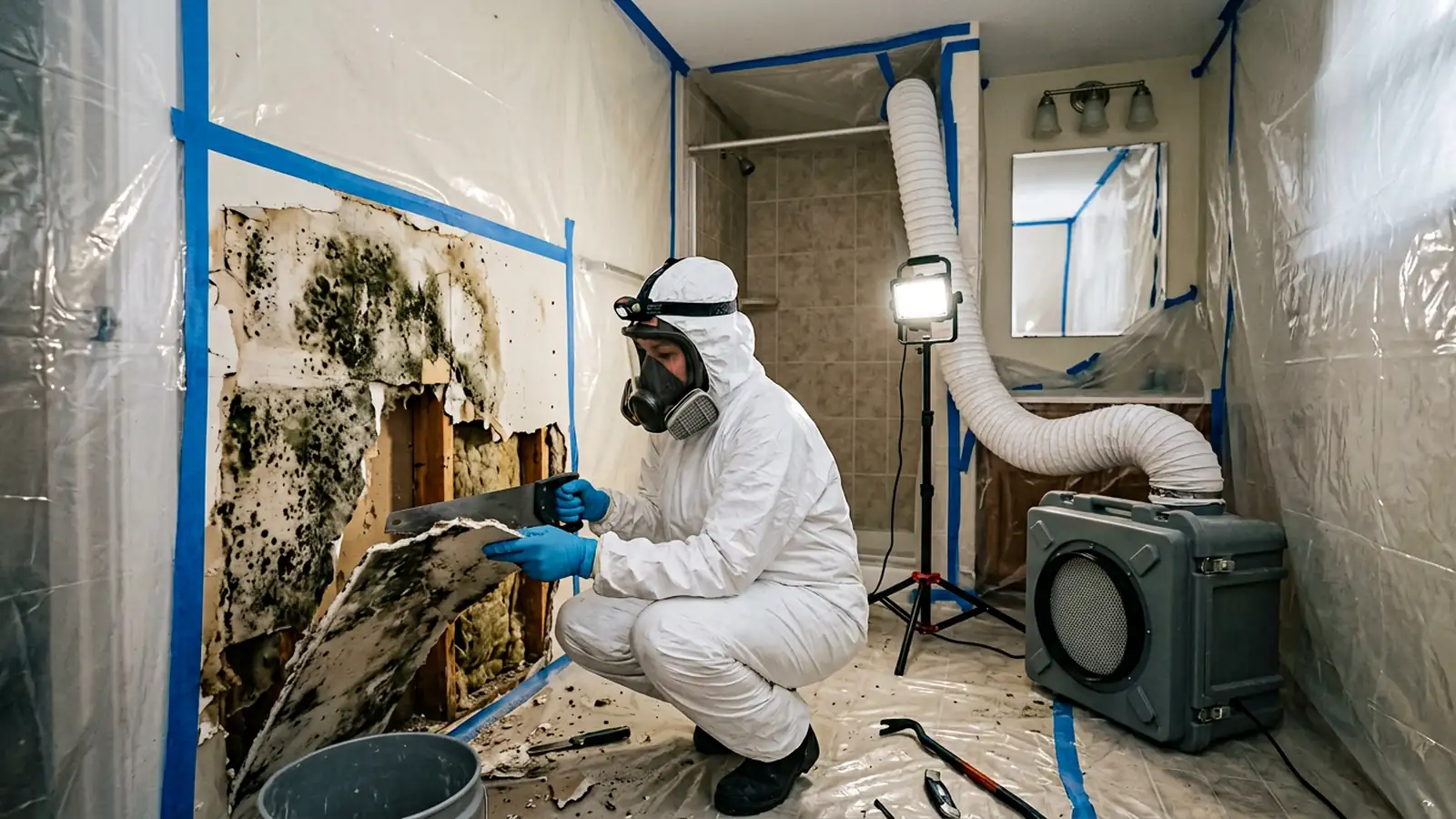
A musty smell with nothing visible, allergy symptoms that improve when you leave the house, a stain that keeps coming back, or a home inspection flag before closing: these are the situations where a mold inspection earns its keep. A professional inspection combines a visual examination, moisture investigation with meters and infrared imaging, and when appropriate, air or surface sampling analyzed by an accredited laboratory, to tell you whether you have a mold problem, where it is, what is feeding it and what to do about it.
Water Restoration connects you with local inspectors and remediation companies. Call (888) 755-3821 to discuss whether an inspection, testing or direct remediation is the right first step.
When a mold inspection makes sense
- You smell mold but cannot find it
- Household members have persistent respiratory or allergy symptoms at home
- There was past water damage, and you are not sure it was dried properly
- You are buying, selling or leasing a property and need documentation
- A tenant or landlord dispute involves mold claims
- An insurance claim requires proof of the cause and extent of growth
- Remediation has been completed and you want independent clearance
If growth is clearly visible and the source is obvious, testing is often unnecessary; the EPA notes that visible mold should simply be removed. An inspector will tell you honestly when that is the case.
What an inspection involves
The inspector walks the entire property, inside and out, looking for water staining, condensation, drainage problems, roof and plumbing leaks, ventilation issues and visible growth. Moisture meters identify wet materials behind finishes; thermal imaging reveals temperature differences caused by hidden moisture. The inspector checks attics, crawlspaces, basements, around windows, under sinks and behind appliances, and documents everything with photographs and readings. The result is a written report describing the conditions found, the likely moisture sources and recommended next steps.
Types of mold testing
- Air sampling: spore trap cassettes collect air in suspect rooms and outdoors for comparison; the lab identifies spore types and concentrations to indicate whether indoor levels are elevated.
- Surface sampling: tape lifts and swabs confirm whether a stain or dust is mold and identify the genus.
- Wall cavity sampling: air is drawn from inside a wall through a small hole to check for hidden growth without demolition.
- Bulk sampling: a piece of material is sent to the lab when identification of growth on that material is needed.
- Post-remediation verification: air and surface samples taken after cleanup, compared to outdoor baselines, to confirm the work succeeded.
Samples should be analyzed by a laboratory accredited for mold analysis, and results should always be interpreted alongside the visual and moisture findings, never on their own.
Independent inspection versus remediation company assessment
Most remediation companies perform a free or low-cost assessment before quoting work. An independent inspector, who does not perform remediation, provides an unbiased scope and is often required for real estate transactions, legal disputes and clearance testing. Several states, including Texas, Florida, Louisiana and New York, license mold assessors separately from remediators and restrict the same company from doing both on one project. We can help you determine which option fits your situation.
Understanding your results
There are no federal standards for acceptable indoor mold levels, so results are interpreted by comparison. Indoor spore counts and types similar to outdoor air generally indicate no indoor source. Indoor counts significantly higher than outdoors, or indoor presence of water-damage indicator species such as Stachybotrys, Chaetomium or elevated Aspergillus/Penicillium, point to an indoor moisture problem that needs to be located and remediated. A good report explains what was found in plain language and prioritizes the moisture repairs.
After the inspection
If the inspection finds a problem, the next steps are fixing the moisture source, remediating the growth under proper containment and verifying the result. If it finds no problem, you have documentation that can satisfy a buyer, tenant or insurer. Either way, the inspection report becomes the roadmap. Water Restoration can connect you with remediation contractors who work from inspection scopes and coordinate clearance testing when the job is complete.
Call (888) 755-3821
Mold Inspection FAQs
How much does a mold inspection cost?
Cost depends on the size of the property, the number of samples taken and laboratory fees. A visual inspection with moisture investigation is less than one that includes multiple air and surface samples. Ask for the fee structure up front.
How long does it take to get results?
The on-site inspection typically takes one to three hours. Laboratory results for air and surface samples usually return in two to five business days, with rush options available.
Are home mold test kits reliable?
Settle-plate kits sold in hardware stores will grow mold almost anywhere because spores are everywhere; they do not tell you whether you have an indoor problem. Professional sampling with outdoor comparison and lab analysis is far more meaningful.
Can an inspection find mold inside walls?
Often, yes. Moisture meters and infrared cameras identify wet areas, and wall cavity air sampling can confirm growth without opening the wall. In some cases a small inspection hole is needed.
Do I need testing after mold remediation?
Post-remediation verification is recommended for larger jobs, for sensitive occupants and whenever documentation is needed. It confirms the area is clean before walls are closed up.