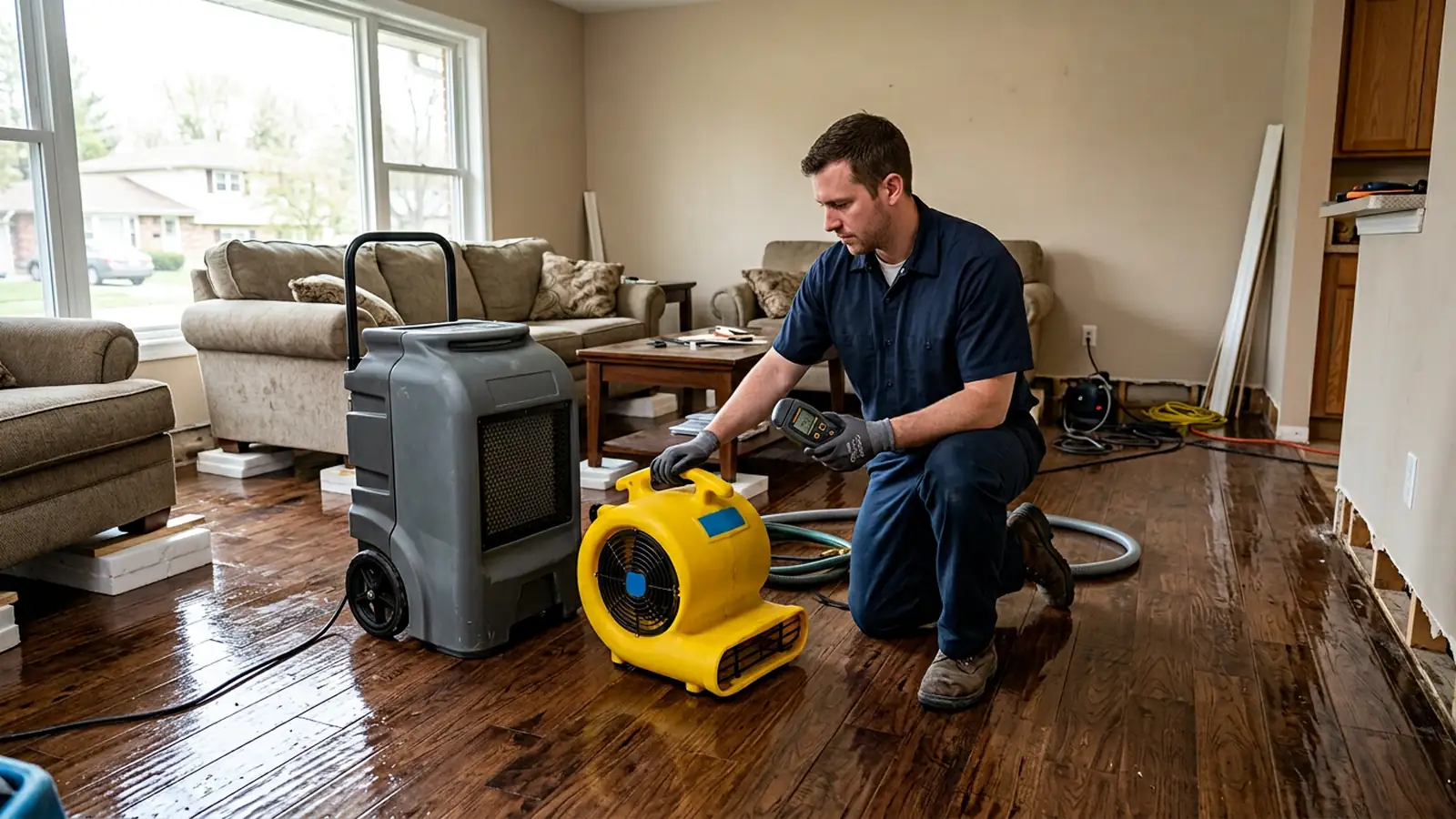
Every week, homeowners and property managers in Fort Worth, TX face water leaks, storm damage, fires and mold problems that cannot wait. Water Restoration exists to shorten the time between the emergency and a trained crew at your door. One call reaches local companies that cover Fort Worth and Tarrant County for water, fire and mold restoration, any hour of the day.
Local properties include everything from pre-war apartment buildings and historic districts to new high-rises, townhome communities and large commercial buildings, and each responds differently to water, smoke and moisture. In a city this size, restoration crews are busy year-round, which is why having a direct line to a company with available technicians matters.
Restoration services available in Fort Worth
Water Damage Restoration in Fort Worth
Burst pipes, appliance failures, roof leaks, slab leaks and storm water. Crews extract standing water, remove unsalvageable materials and dry the structure with commercial dehumidifiers and air movers while documenting everything for your claim.
Fire Damage Restoration in Fort Worth
Kitchen fires, electrical fires and smoke from neighboring properties. Crews secure the building, clean soot from structure and contents, remove odor at the source and rebuild.
Mold Remediation in Fort Worth
Visible growth, musty odors or mold found during a home inspection. Local remediation companies work under the IICRC S520 standard with containment, HEPA air scrubbing and verified results.
Local risks: Fort Worth and Tarrant County
Fort Worth shares the weather and building patterns of the rest of the state. Texas has every major cause of water damage: Gulf hurricanes and extreme rainfall on the coast, flash floods in the Hill Country, hail and tornadoes across the north, and winter freezes that burst pipes in homes built for heat. Slab foundations over expansive clay make slab leaks common, and long cooling seasons produce air-conditioning condensate overflows. Problems tend to peak during spring storms, hurricane season and occasional winter freezes, but plumbing failures and appliance leaks happen in every month of the year.
In Fort Worth, the most frequent emergencies look like this:
- Flash flooding that pushes water through doors, window wells and foundation walls in minutes
- Leaking shower pans and failed tile grout
- Tidal and coastal flooding in low-lying neighborhoods, plus salt-air corrosion of plumbing
- Clogged air-conditioning condensate lines and overflowing drain pans that soak ceilings and closets
- Tornado and straight-line wind damage that opens roofs and walls to rain
- Pinhole leaks in copper lines inside walls
- Space heater, fireplace and chimney fires during cold weather
- Wildfire smoke, ash and soot infiltration, and structure fires at the wildland edge
- Salt air and coastal humidity that keep building materials damp
- Window condensation and attic frost in winter
First steps for Fort Worth property owners
A few actions in the first minutes limit the damage and protect your claim:
- If you see or smell mold, avoid disturbing it and keep the area closed off until it is assessed
- Open your insurance claim early; mitigation is a policy condition and delays can reduce what is paid
- Stay out of standing water that could be electrically charged or contaminated with sewage
- Do not run the HVAC system if ducts or the air handler got wet, and do not use household fans on sewage or flood water
- Move rugs, furniture legs and valuables out of the water and off wet floors
- After a fire, wait for the fire department to release the property and do not wipe soot with water, which smears it into surfaces
From your call to a crew at the door
- Call (888) 755-3821. Describe what happened, where you are in Fort Worth and whether the water is still running or the fire is out.
- Your call is routed to a local restoration company with availability. They confirm details, give an arrival window and tell you what to do in the meantime.
- The crew arrives, inspects the damage, stops further loss (extraction, board-up, containment) and explains the scope, timeline and how the insurance process will work.
- Drying, cleaning or remediation continues with daily readings until the structure is verified dry and clean; reconstruction follows.
Why Fort Worth property owners call Water Restoration
- One number covers water, fire, smoke, mold, sewage and biohazard emergencies
- There is no cost or obligation to call and talk through what you are seeing
- A live person answers around the clock, because water and fire do not keep business hours
- You are connected with a restoration company that actually serves Fort Worth, not a national call center that will call you back tomorrow
- Crews document the loss with photos, moisture readings and itemized estimates in the format insurance adjusters expect
Service area: Fort Worth and Tarrant County
We route calls from all 56 Fort Worth ZIP codes, including 76101, 76102, 76103 to restoration companies that work Fort Worth and Tarrant County every week.
ZIP codes served in Fort Worth: 76101, 76102, 76103, 76104, 76105, 76106, 76107, 76108, 76109, 76110, 76111, 76112 and 44 more.
The same crews also serve nearby communities including Naval Air Station Jrb (2 mi), Haltom City (4 mi), North Richland Hills (9 mi), Arlington (9 mi), Hurst (10 mi), Kennedale (10 mi), Bedford (12 mi), Keller (12 mi), Crowley (13 mi) and Colleyville (13 mi). If you are just outside Fort Worth, call anyway; coverage areas overlap.
Building types, timing and seasonal risk
Regardless of the age of a building, water finds the same weak points: supply connections, roof penetrations, window flashing and anywhere two materials meet.
Winter brings frozen and burst pipes; spring and summer bring the heavy rain, saturated ground and sump failures that flood lower levels. Home fires peak in winter, when space heaters, fireplaces and furnaces are running and holiday cooking and decorating add risk. Humid summers mean mold can establish itself in days, and air-conditioned interiors create condensation on cold surfaces that keeps feeding it.
Fort Worth restoration FAQs
Does homeowners insurance in Texas cover water damage?
Standard policies generally cover sudden and accidental water damage, such as a burst pipe or appliance failure. Flooding from rising water, long-term leaks and neglected maintenance are usually excluded, and sewer backup often requires an endorsement. Check your specific policy or ask your agent.
Are the restoration companies licensed and insured?
The companies in the network are independent businesses responsible for their own licensing and insurance. Ask the crew for proof of liability insurance, any state license Texas requires for the work, and IICRC certification, and get the scope of work in writing.
Will the crew work with my insurance company?
Yes. Restoration companies deal with adjusters every day. They document the loss with photos, moisture readings and itemized estimates, and most bill covered mitigation work directly to the carrier.
Is Water Restoration a local Fort Worth company?
Water Restoration is a nationwide service that connects you with independent, locally operated restoration companies. The crew that arrives at your Fort Worth property is a local business that works in Tarrant County regularly. We recommend confirming their licensing, insurance and certifications before work begins.
Do I pay anything to call?
No. Calling (888) 755-3821 and discussing your situation is free, and there is no obligation. You pay only for restoration work you agree to with the company that comes out, and covered work is usually billed to your insurance carrier.