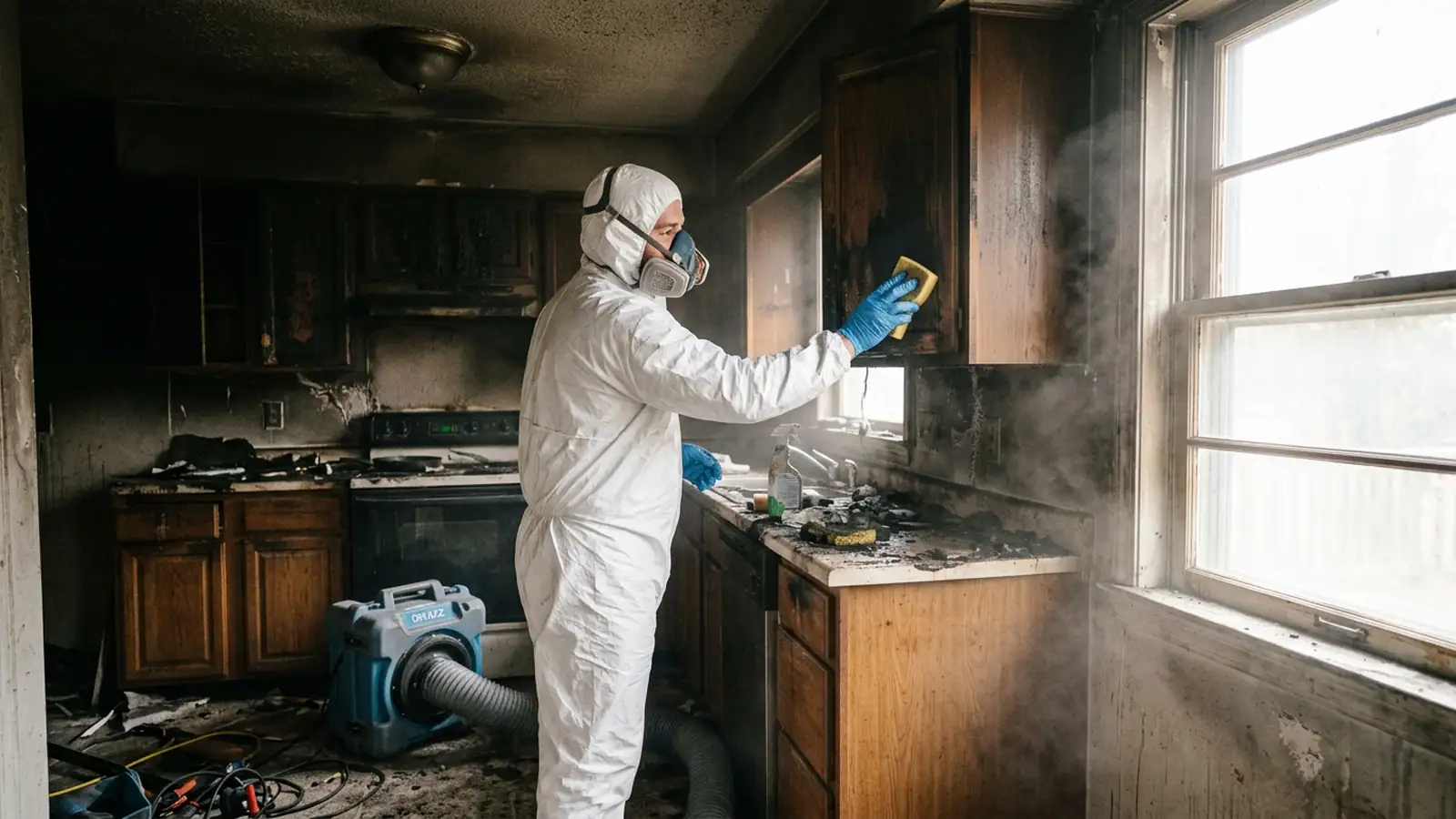
After the fire department leaves, a property owner is left with a structure that is wet from suppression water, coated in soot, saturated with smoke odor and often open to the weather. Fire damage restoration is the coordinated process of securing the building, removing water and debris, cleaning smoke and soot from every surface and item, neutralizing odor, and rebuilding damaged areas so the property can be lived in or operated again.
Water Restoration connects you with fire and smoke restoration contractors in your area, 24 hours a day. Call (888) 755-3821 for emergency board-up, tarping and the start of cleanup, and for help understanding what your insurance claim will cover.
Why fire damage gets worse every day
Soot is acidic. Within hours it begins to discolor plastics, countertops and appliance finishes; within days it etches glass, tarnishes metal and stains grout permanently. Smoke odor penetrates drywall, insulation, framing and upholstered contents, and the longer it sits, the harder it is to remove. Meanwhile, suppression water left standing in the structure starts the same clock that every water loss faces: swelling, delamination and mold growth within a few days.
This is why restoration companies push to get on site within the first 24 to 48 hours even when the reconstruction will take months. Early stabilization dramatically changes what can be saved and what has to be replaced.
Types of fire and smoke damage
The type of fire determines the cleaning methods. Restoration technicians distinguish between several kinds of smoke residue:
- Wet smoke from slow, smoldering, low-heat fires (often plastics and rubber): sticky, smeary residue with a pungent odor that is difficult to clean.
- Dry smoke from fast, hot fires fueled by paper and wood: dry, powdery soot that is easier to remove but travels into every crack and cavity.
- Protein residue from kitchen fires: nearly invisible film that discolors paint and varnish and carries an extremely persistent odor.
- Fuel oil soot from furnace puff-backs: oily residue distributed through the ductwork across the whole house.
- Fire-extinguisher residue and suppression water, which add chemical and water damage on top of the smoke.
Our fire damage restoration process
- Emergency contact and site safety. Once the fire marshal releases the property, the crew checks structural stability, utilities and air quality before anyone enters.
- Board-up, tarping and security. Broken windows, doors and roof openings are sealed to protect the property from weather, animals and intruders.
- Water removal and drying. Suppression water is extracted and the structure dried to prevent secondary damage and mold.
- Soot and smoke removal. Surfaces are cleaned with dry chemical sponges, HEPA vacuuming, degreasers and specialty agents chosen for the type of residue.
- Contents cleaning and pack-out. Salvageable furniture, clothing, electronics and documents are inventoried, cleaned off-site or on-site, and stored until rebuild is complete.
- Odor removal. Thermal fogging, hydroxyl generators, ozone treatment (in unoccupied spaces) and sealing of structural surfaces eliminate odor rather than masking it.
- Reconstruction. Damaged framing, drywall, insulation, roofing, electrical and finishes are rebuilt to code, and the property is returned to pre-loss condition.
What can be saved after a fire
More than most people expect. Hard, non-porous items like glass, ceramics, metal and sealed wood clean up well. Many textiles can be restored with ozone and specialty laundering. Electronics that were not directly exposed to heat can often be cleaned and tested. Documents and photographs can be freeze-dried and cleaned by specialists.
Items that are typically not salvageable include food exposed to heat or smoke, cosmetics and medicines, melted or charred plastics, and porous materials that absorbed heavy smoke such as mattresses, particleboard furniture and heavily sooted drywall and insulation. A reputable restoration company will document non-salvageable items for your claim rather than charging to clean things that cannot be saved.
Smoke damage without visible fire
Many smoke claims involve no flames at all in the affected area: a kitchen fire that was put out quickly but filled the house with protein residue, a furnace puff-back, a neighbor's fire that pushed smoke through shared walls or windows, or wildfire smoke infiltrating a home for weeks. These losses still require professional cleaning of surfaces, ductwork and contents, because the residue is acidic and the odor is persistent.
Insurance and the fire claim process
Fire is a named peril in essentially every homeowners and commercial property policy, and most policies also pay additional living expenses (ALE) if the home is uninhabitable. The claim process involves a detailed inventory of damaged contents, a structural estimate, and often a separate pack-out and cleaning estimate. Restoration companies prepare these documents in the format adjusters expect and can meet the adjuster on site.
You generally have the right to choose your own restoration contractor. Be cautious of anyone who shows up uninvited at a fire scene; take the time to call a company you have vetted.
Why property owners call Water Restoration after a fire
- Emergency board-up and tarping dispatched any hour of the day
- Crews that handle the water, soot, odor and rebuild phases rather than hand you off to multiple companies
- Experience with contents inventories and ALE documentation for insurance claims
- Local companies that know regional building codes and permitting
- Straight answers about what can be cleaned and what should be replaced
Call (888) 755-3821
Fire Damage FAQs
What should I do first after a house fire?
Make sure everyone is safe and do not re-enter until the fire department says the structure is safe. Contact your insurance company to open a claim, then call for emergency board-up and mitigation. Photograph the damage before anything is moved if it is safe to do so.
Can smoke smell be completely removed?
Yes, when the sources of the odor are addressed. That means cleaning or removing soot-laden materials, cleaning ductwork, treating cavities and contents, and using thermal fogging, hydroxyl or ozone to neutralize remaining odor molecules. Simply painting over smoke-stained walls without cleaning and sealing them rarely works.
How long does fire restoration take?
Emergency stabilization happens within a day or two. Cleaning and deodorizing a smoke-damaged home typically takes one to several weeks. Full reconstruction after a significant structural fire can take several months depending on permitting and the extent of the damage.
Is it safe to clean up soot myself?
Light soot on hard surfaces can be wiped with a dry chemical sponge, but wet cleaning usually smears soot deeper into surfaces. Soot particles are also a respiratory irritant and may contain toxic combustion byproducts, so protective equipment is important. Significant soot or any odor problem is best left to professionals.
Will my insurance pay for a hotel during repairs?
Most homeowners policies include additional living expenses or loss-of-use coverage that pays for temporary housing and extra costs while the home is uninhabitable, up to the policy limit. Keep every receipt.