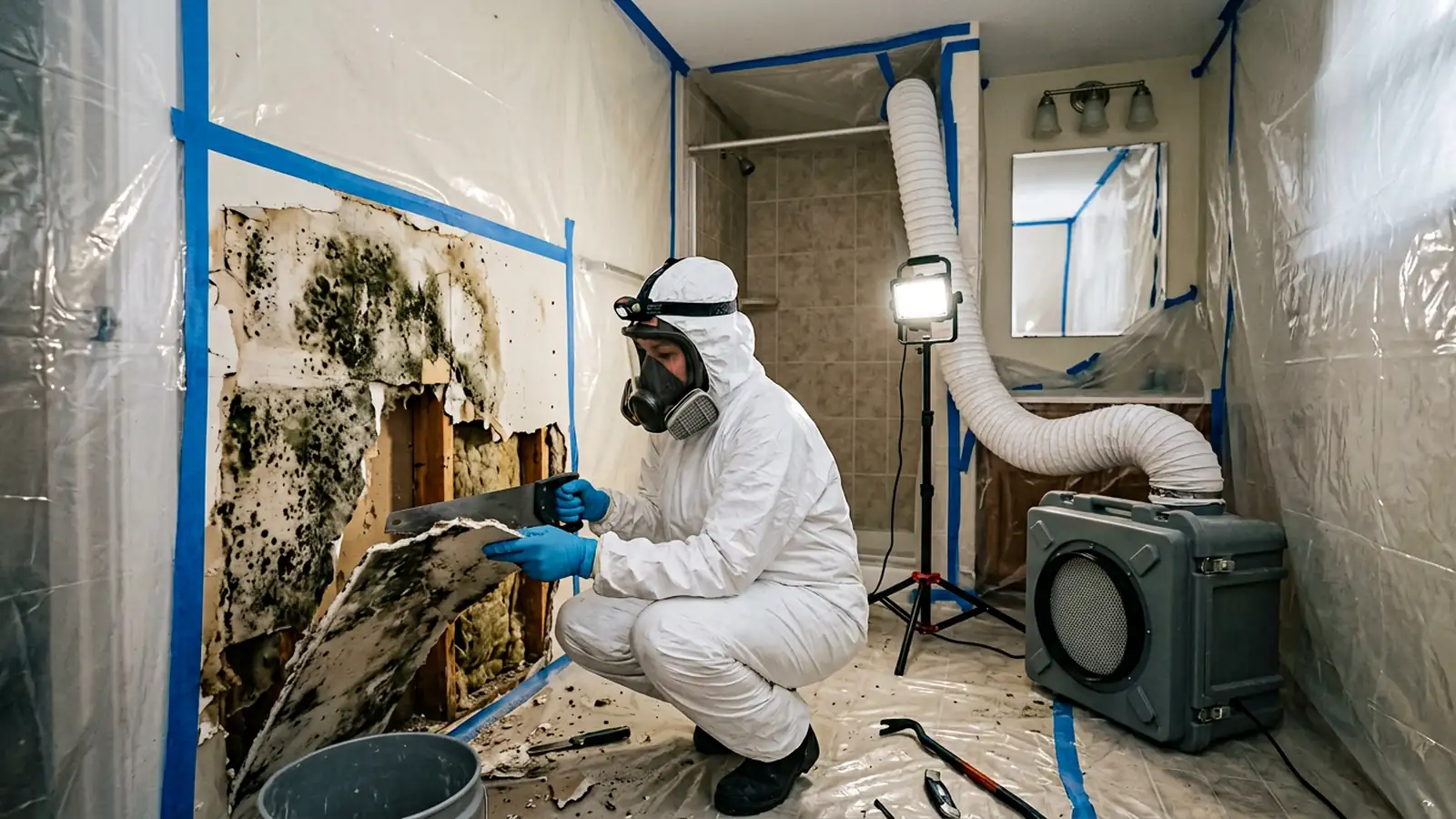
Spores are everywhere; they only become a colony when water is present for more than a day or two. Professional mold remediation in Fort Worth corrects the moisture source, removes contaminated materials under negative-air containment so spores do not spread through the building, cleans and treats the remaining structure and confirms the area is back to normal. Water Restoration connects you with local companies that do exactly that.
Fort Worth is one of the biggest and busiest cities in Texas, home to roughly 1,008,100 residents, with a huge range of property types, from century-old homes to new construction, mid-rise apartments and office and retail space. Every property type in Fort Worth has its own failure points, which is why crews map moisture with meters and infrared cameras before deciding what to remove.
Common moisture sources behind mold in Fort Worth, TX
The risks in Fort Worth in Tarrant County are shaped by Texas's climate and housing. Texas has every major cause of water damage: Gulf hurricanes and extreme rainfall on the coast, flash floods in the Hill Country, hail and tornadoes across the north, and winter freezes that burst pipes in homes built for heat. Slab foundations over expansive clay make slab leaks common, and long cooling seasons produce air-conditioning condensate overflows. Problems tend to peak during spring storms, hurricane season and occasional winter freezes, but plumbing failures and appliance leaks happen in every month of the year.
- Salt air and coastal humidity that keep building materials damp
- Bathroom fans venting into cold attics
- Leaks under kitchen and bathroom sinks
- Moisture left behind after fire-suppression water
- Window condensation and attic frost in winter
- Water heater and plumbing leaks in utility closets
- Bathrooms with poor ventilation and recurring ceiling or grout mold
- Flood water that was never fully dried out of walls and floors
Do you need professional mold remediation in Fort Worth?
Small, surface-level growth on tile or sealed surfaces can be handled by a careful homeowner. Anything larger, anything hidden in cavities, anything following contaminated water, and anything involving sensitive occupants calls for containment, HEPA filtration and trained technicians. If you are not sure, an inspection will tell you which situation you are in.
Bleach is not a solution: it removes surface staining on non-porous materials but does not penetrate drywall or wood where the growth is rooted, and the water in it can feed regrowth. Porous materials with growth are removed; structural wood is cleaned, treated and dried.
Our mold remediation process in Fort Worth
- Assessment and moisture investigation with meters and infrared imaging to find the source and the full extent of growth. Independent testing can be arranged when documentation is needed.
- Isolation of the work area with containment barriers and negative air machines exhausting through HEPA filters.
- Air scrubbing. HEPA air scrubbers clean the air throughout the project.
- Removal and cleaning. Porous materials with growth are removed; framing and sheathing are cleaned by HEPA vacuuming, wiping and abrasive methods where required.
- Antimicrobial application and, where appropriate, encapsulation of cleaned surfaces.
- Correction of the moisture source, drying to normal levels and verification, by inspection or independent clearance testing, before containment comes down and reconstruction begins.
Do you need mold testing?
An inspection combines a visual examination, moisture meters and infrared imaging with, when warranted, air or surface samples analyzed by an accredited laboratory and compared with outdoor baselines. In Fort Worth, inspections are most often requested after a home inspection flags growth, when a tenant reports symptoms, or when a past leak was never properly dried.
Pricing, estimates and insurance claims
Mold remediation cost in Fort Worth depends on the size of the affected area, how accessible it is, what materials are involved and whether the moisture source has already been fixed.
Whether insurance pays for mold depends on what caused it. Growth that follows a covered water loss is often covered up to a sublimit; growth from deferred maintenance or chronic dampness generally is not.
Ask the crew to walk you through the estimate and the claim process; good documentation from day one is the best way to get a claim paid.
Areas we serve in and around Fort Worth
We route calls from all 56 Fort Worth ZIP codes, including 76101, 76102, 76103 to restoration companies that work Fort Worth and Tarrant County every week.
ZIP codes served in Fort Worth: 76101, 76102, 76103, 76104, 76105, 76106, 76107, 76108, 76109, 76110, 76111, 76112 and 44 more.
The same crews also serve nearby communities including Naval Air Station Jrb (2 mi), Haltom City (4 mi), North Richland Hills (9 mi), Arlington (9 mi), Hurst (10 mi), Kennedale (10 mi), Bedford (12 mi), Keller (12 mi), Crowley (13 mi) and Colleyville (13 mi). If you are just outside Fort Worth, call anyway; coverage areas overlap.
What to expect when you call about mold remediation in Fort Worth
- One number covers water, fire, smoke, mold, sewage and biohazard emergencies
- There is no cost or obligation to call and talk through what you are seeing
- The companies we work with deal with insurance adjusters daily and can bill covered mitigation directly to your carrier
- You can ask about licensing, insurance and IICRC certification before any work begins, and you should
- You are connected with a restoration company that actually serves Fort Worth, not a national call center that will call you back tomorrow
Mold Remediation in Fort Worth: FAQs
Can I just use bleach?
Bleach removes surface staining on non-porous materials but does not reach the roots of growth in drywall or wood, and its water content can feed regrowth. It also does nothing about the moisture source.
Will mold come back?
Not if the moisture problem is corrected. Mold returns only when materials get wet again. A reputable contractor identifies the source, verifies dryness and advises on humidity control before closing out the job.
Does insurance cover mold remediation in Texas?
Often only when the mold results from a covered sudden loss such as a burst pipe, and frequently subject to a dollar cap. Mold from humidity, long-term leaks or deferred maintenance is usually excluded. Check your policy or ask your agent.
What does mold smell like, and what if I smell it but cannot see it?
A musty, earthy odor, often strongest in closets and bathrooms and after rain. Odor without visible growth usually means mold inside a wall, under flooring or in the HVAC system; a moisture inspection with infrared imaging can locate it.
Do you remediate mold in commercial buildings in Fort Worth?
Yes. Offices, retail spaces, multifamily buildings and other commercial properties are remediated under containment so the rest of the building can keep operating, with documentation for tenants, lenders and insurers.