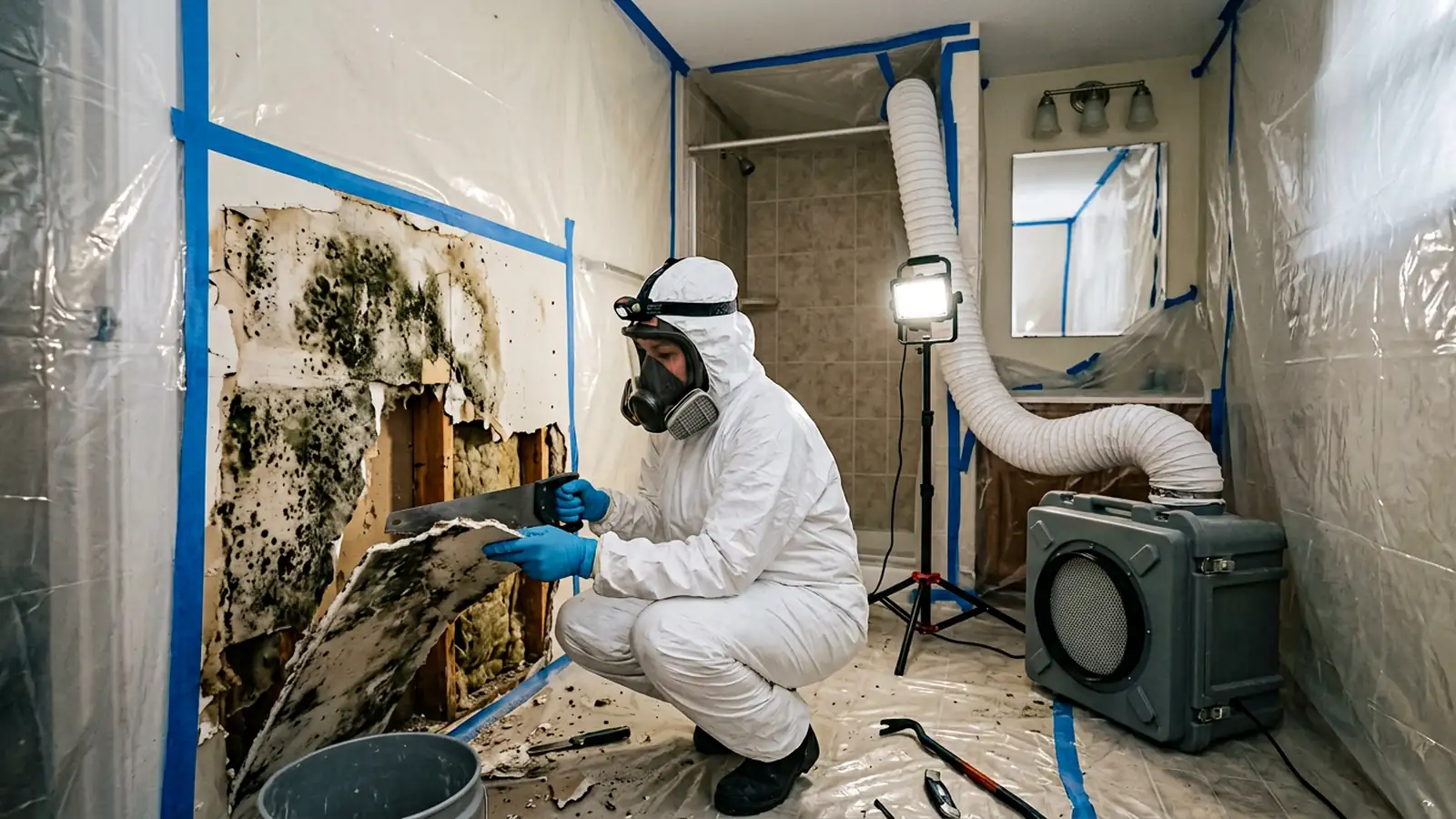
Spores are everywhere; they only become a colony when water is present for more than a day or two. Professional mold remediation in Battle Ground corrects the moisture source, removes contaminated materials under negative-air containment so spores do not spread through the building, cleans and treats the remaining structure and confirms the area is back to normal. Water Restoration connects you with local companies that do exactly that.
Battle Ground is a close-knit community in Washington, home to roughly 23,000 residents, with single-family homes of varying ages, a few apartment and townhome communities, and locally owned businesses. Regardless of the age of a building, water finds the same weak points: supply connections, roof penetrations, window flashing and anywhere two materials meet.
What feeds mold growth in Battle Ground
Battle Ground shares the weather and building patterns of the rest of the state. Western Washington's long wet season saturates crawlspaces and overwhelms gutters and drainage, with atmospheric rivers producing river flooding, while eastern Washington contends with hard freezes and wildfire. Smoke damage from regional fires is now a recurring summer issue. Problems tend to peak during the november-to-march rainy season, but plumbing failures and appliance leaks happen in every month of the year.
- Window condensation and attic frost in winter
- Refrigerator, dishwasher and washing machine leaks behind appliances
- Window, door and siding leaks after heavy rain
- Flood water that was never fully dried out of walls and floors
- Bathrooms with poor ventilation and recurring ceiling or grout mold
- Damp crawlspaces with mold on floor joists and subfloor
- Meltwater seepage into foundations each spring
- Roof leaks that stain ceilings and wet attic insulation
DIY cleanup versus professional remediation
Small, surface-level growth on tile or sealed surfaces can be handled by a careful homeowner. Anything larger, anything hidden in cavities, anything following contaminated water, and anything involving sensitive occupants calls for containment, HEPA filtration and trained technicians. If you are not sure, an inspection will tell you which situation you are in.
Bleach is not a solution: it removes surface staining on non-porous materials but does not penetrate drywall or wood where the growth is rooted, and the water in it can feed regrowth. Porous materials with growth are removed; structural wood is cleaned, treated and dried.
Our mold remediation process in Battle Ground
- Assessment and moisture investigation with meters and infrared imaging to find the source and the full extent of growth. Independent testing can be arranged when documentation is needed.
- Isolation of the work area with containment barriers and negative air machines exhausting through HEPA filters.
- HEPA air filtration runs continuously during and after the work to capture airborne spores and dust.
- Removal of contaminated porous materials such as drywall, insulation, carpet and ceiling tile, bagged inside containment. Structural wood is HEPA vacuumed, damp wiped, sanded or media blasted as needed.
- Treatment with an EPA-registered antimicrobial where appropriate, and an encapsulant on cleaned framing when specified.
- Drying and moisture correction so the structure returns to normal moisture content, followed by visual and, when required, independent post-remediation verification before rebuild.
Mold testing and inspection in Battle Ground
If you can see growth, the EPA notes that sampling is usually unnecessary because it must be removed either way. Testing is valuable when you smell mold but cannot find it, when occupants have health concerns, when a landlord, buyer or insurer needs documentation, or for post-remediation clearance. Ask whether the company performs its own testing or uses an independent inspector; for disputes and real estate transactions, independent testing carries more weight.
Pricing, estimates and insurance claims
A small bathroom wall and a whole crawlspace are very different remediation projects. Size, access, materials and the amount of reconstruction afterward drive the price.
Whether insurance pays for mold depends on what caused it. Growth that follows a covered water loss is often covered up to a sublimit; growth from deferred maintenance or chronic dampness generally is not.
Ask the crew to walk you through the estimate and the claim process; good documentation from day one is the best way to get a claim paid.
Service area: Battle Ground and Clark County
We route calls from ZIP code 98604 to restoration companies that work Battle Ground and Clark County every week.
The same crews also serve nearby communities including Heisson (3 mi), Brush Prairie (5 mi), Yacolt (7 mi), La Center (8 mi), Ridgefield (8 mi), Amboy (10 mi), Vancouver (10 mi), Woodland (13 mi), Camas (14 mi) and Ariel (14 mi). If you are just outside Battle Ground, call anyway; coverage areas overlap.
Why call Water Restoration
- You are connected with a restoration company that actually serves Battle Ground, not a national call center that will call you back tomorrow
- One number covers water, fire, smoke, mold, sewage and biohazard emergencies
- There is no cost or obligation to call and talk through what you are seeing
- Crews document the loss with photos, moisture readings and itemized estimates in the format insurance adjusters expect
- Calls are answered 24 hours a day, including nights, weekends and holidays
Mold Remediation in Battle Ground: FAQs
Can I just use bleach?
Bleach removes surface staining on non-porous materials but does not reach the roots of growth in drywall or wood, and its water content can feed regrowth. It also does nothing about the moisture source.
Do I need mold testing before remediation?
Not if growth is visible and the source is clear. Testing helps when mold is suspected but hidden, when occupants have symptoms, when documentation is needed for a sale, lease or claim, and for post-remediation clearance.
Is mold common in Battle Ground?
Yes. Wherever water damage was not fully dried, or where humidity, condensation or leaks persist, mold follows. Local crews see it year-round.
Should we leave the house during remediation?
For small, well-contained jobs most families stay and simply avoid the work area. For large projects, or when someone is sensitive, immunocompromised or asthmatic, staying elsewhere during removal is often recommended.
Will mold come back?
Not if the moisture problem is corrected. Mold returns only when materials get wet again. A reputable contractor identifies the source, verifies dryness and advises on humidity control before closing out the job.