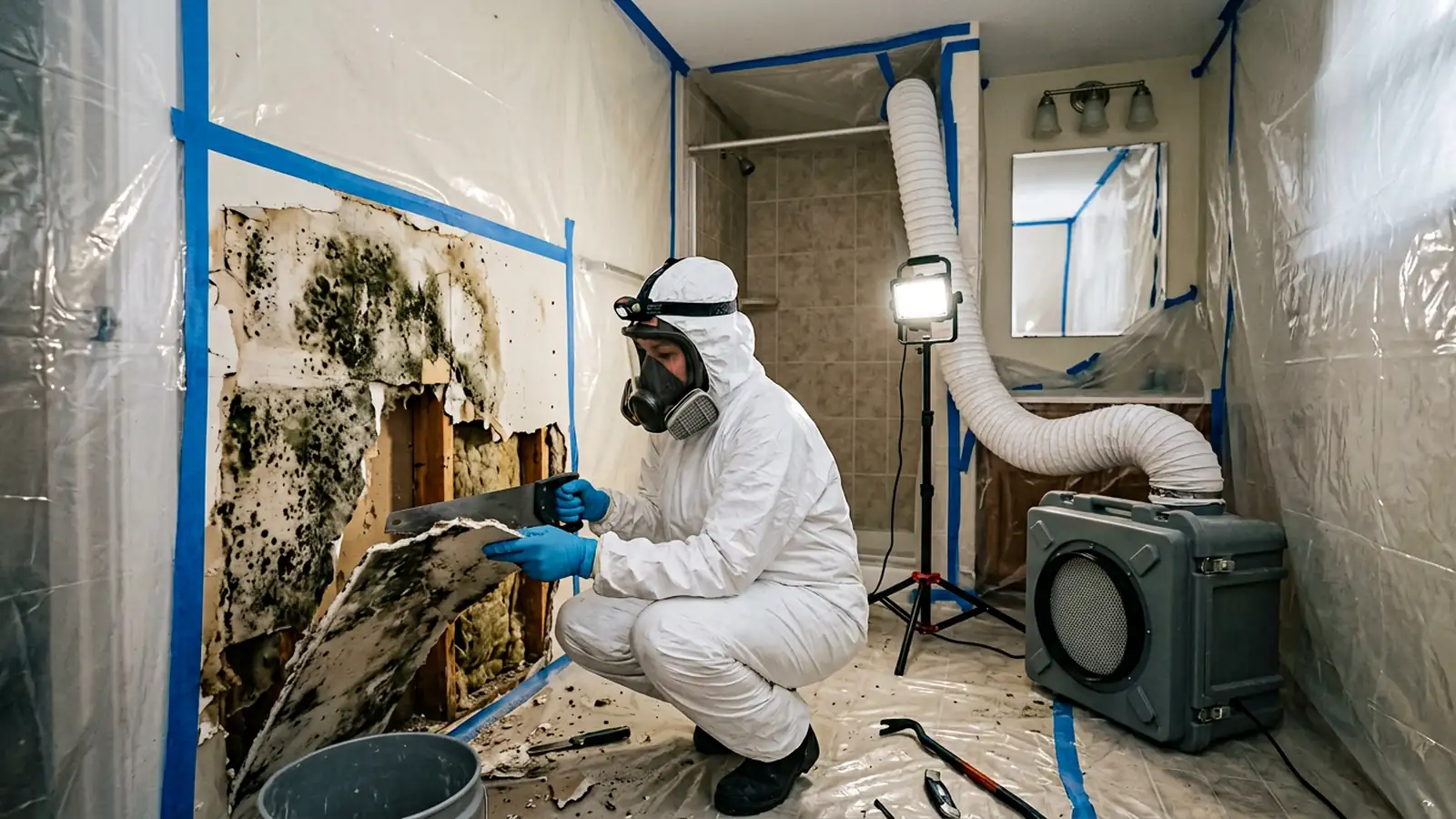
Spores are everywhere; they only become a colony when water is present for more than a day or two. Professional mold remediation in Duncanville corrects the moisture source, removes contaminated materials under negative-air containment so spores do not spread through the building, cleans and treats the remaining structure and confirms the area is back to normal. Water Restoration connects you with local companies that do exactly that.
Duncanville is a town in Texas, home to roughly 39,200 residents, with single-family homes of varying ages, a few apartment and townhome communities, and locally owned businesses. Every property type in Duncanville has its own failure points, which is why crews map moisture with meters and infrared cameras before deciding what to remove.
What feeds mold growth in Duncanville
Duncanville shares the weather and building patterns of the rest of the state. Texas has every major cause of water damage: Gulf hurricanes and extreme rainfall on the coast, flash floods in the Hill Country, hail and tornadoes across the north, and winter freezes that burst pipes in homes built for heat. Slab foundations over expansive clay make slab leaks common, and long cooling seasons produce air-conditioning condensate overflows. Problems tend to peak during spring storms, hurricane season and occasional winter freezes, but plumbing failures and appliance leaks happen in every month of the year.
- Refrigerator, dishwasher and washing machine leaks behind appliances
- Salt air and coastal humidity that keep building materials damp
- Air-conditioning condensate leaks and sweating ductwork in closets and attics
- HVAC systems and ductwork with mold on coils and insulation
- Leaks under kitchen and bathroom sinks
- Bathroom fans venting into cold attics
- Storm damage that let rain into attics and walls
- Flood water that was never fully dried out of walls and floors
DIY cleanup versus professional remediation
Small, surface-level growth on tile or sealed surfaces can be handled by a careful homeowner. Anything larger, anything hidden in cavities, anything following contaminated water, and anything involving sensitive occupants calls for containment, HEPA filtration and trained technicians. If you are not sure, an inspection will tell you which situation you are in.
Health agencies note that mold exposure can cause nasal congestion, throat and eye irritation, coughing and skin irritation, with more serious reactions in people with allergies, asthma or weakened immune systems. In Duncanville, where humidity is high for much of the year, symptoms that improve when you leave the house are a classic sign.
Our mold remediation process in Duncanville
- Assessment and moisture investigation with meters and infrared imaging to find the source and the full extent of growth. Independent testing can be arranged when documentation is needed.
- Isolation of the work area with containment barriers and negative air machines exhausting through HEPA filters.
- Air scrubbing. HEPA air scrubbers clean the air throughout the project.
- Removal of contaminated porous materials such as drywall, insulation, carpet and ceiling tile, bagged inside containment. Structural wood is HEPA vacuumed, damp wiped, sanded or media blasted as needed.
- Treatment with an EPA-registered antimicrobial where appropriate, and an encapsulant on cleaned framing when specified.
- Correction of the moisture source, drying to normal levels and verification, by inspection or independent clearance testing, before containment comes down and reconstruction begins.
Mold testing and inspection in Duncanville
If you can see growth, the EPA notes that sampling is usually unnecessary because it must be removed either way. Testing is valuable when you smell mold but cannot find it, when occupants have health concerns, when a landlord, buyer or insurer needs documentation, or for post-remediation clearance. Texas licenses mold assessors and remediators and restricts the same company from both testing and remediating the same job without disclosure, so ask about licensing before you hire.
What mold damage remediation costs in Duncanville and what insurance covers
A small bathroom wall and a whole crawlspace are very different remediation projects. Size, access, materials and the amount of reconstruction afterward drive the price.
Insurance treats mold cautiously: it is often covered only when it results from a covered sudden loss, such as a burst pipe, and many policies cap mold coverage at a set dollar amount. Mold from humidity or long-term leaks is usually excluded.
Get the scope and pricing in writing, ask what the carrier typically covers, and keep every receipt for emergency expenses.
Duncanville neighborhoods and ZIP codes covered
We route calls from ZIP codes 75116, 75137 and 75138 to restoration companies that work Duncanville and Dallas County every week.
The same crews also serve nearby communities including Desoto (6 mi), Lancaster (8 mi), Cedar Hill (8 mi), Dallas (8 mi), Grand Prairie (9 mi), Hutchins (10 mi), Irving (12 mi), Red Oak (12 mi), Wilmer (12 mi) and Balch Springs (14 mi). If you are just outside Duncanville, call anyway; coverage areas overlap.
Why Duncanville property owners call Water Restoration
- There is no cost or obligation to call and talk through what you are seeing
- We route you to a local company that already works in Duncanville and Dallas County
- One number covers water, fire, smoke, mold, sewage and biohazard emergencies
- Crews document the loss with photos, moisture readings and itemized estimates in the format insurance adjusters expect
- A live person answers around the clock, because water and fire do not keep business hours
Mold Remediation in Duncanville: FAQs
Is black mold in my Duncanville home dangerous?
Color does not reliably indicate toxicity. Stachybotrys can produce mycotoxins, but many harmless molds are dark and some light-colored molds are strongly allergenic. Any significant indoor growth should be removed and its moisture source fixed, regardless of color.
Do you remediate mold in commercial buildings in Duncanville?
Yes. Offices, retail spaces, multifamily buildings and other commercial properties are remediated under containment so the rest of the building can keep operating, with documentation for tenants, lenders and insurers.
Do I need mold testing before remediation?
Not if growth is visible and the source is clear. Testing helps when mold is suspected but hidden, when occupants have symptoms, when documentation is needed for a sale, lease or claim, and for post-remediation clearance.
How long does mold remediation take in Duncanville?
A single room or small bathroom job often takes one to three days. Multi-room, attic or whole-crawlspace projects can take a week or more, plus reconstruction afterward.
Does insurance cover mold remediation in Texas?
Often only when the mold results from a covered sudden loss such as a burst pipe, and frequently subject to a dollar cap. Mold from humidity, long-term leaks or deferred maintenance is usually excluded. Check your policy or ask your agent.