Glenolden is a small community in Pennsylvania, home to roughly 7,300 residents, and like every community it has its share of burst pipes, basement floods, kitchen fires and hidden mold. Water Restoration gives residents and businesses one number to call for all of it: (888) 755-3821, answered around the clock and routed to a restoration company that serves ZIP code 19036.
Glenolden's properties range across homes spread across the countryside, many on private wells and septic systems, along with barns, shops and seasonal cabins. Rural properties bring their own issues: well pump and pressure tank failures, septic backups, and seasonal homes that sit unheated and unwatched.
Restoration services available in Glenolden
Water Damage Restoration
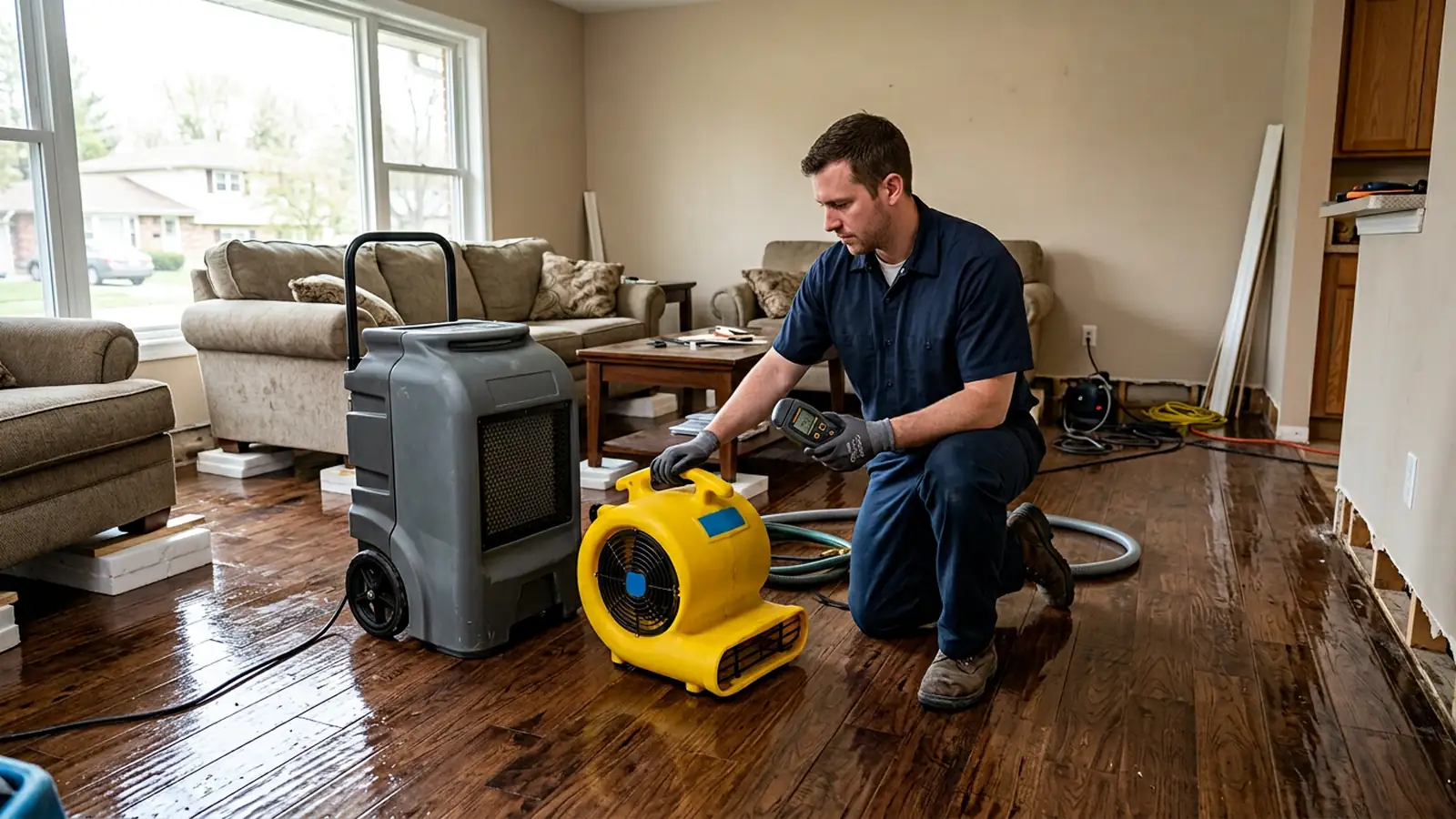
Burst pipes, appliance failures, roof leaks, basement flooding and storm water. Crews extract standing water, remove unsalvageable materials and dry the structure with commercial dehumidifiers and air movers while documenting everything for your claim.
Fire Damage Restoration
Kitchen fires, electrical fires, furnace puff-backs and smoke from neighboring properties. Crews secure the building, clean soot from structure and contents, remove odor at the source and rebuild.
Mold Remediation
Visible growth, musty odors or mold found during a home inspection. Local remediation companies work under the IICRC S520 standard with containment, HEPA air scrubbing and verified results.
Local risks: Glenolden and Delaware County
Property owners in Glenolden deal with the same regional risks found throughout Pennsylvania. Pennsylvania's rolling terrain funnels heavy rain into flash floods, its rivers crest after spring snowmelt and tropical remnants, and its older homes and basements are prone to seepage, sewer backups and burst pipes in winter. Problems tend to peak during spring and the late-summer tropical remnant season, but plumbing failures and appliance leaks happen in every month of the year.
In Glenolden, the most frequent emergencies look like this:
- Water heater tank failures that release 40 to 80 gallons at once
- Flash flooding that pushes water through doors, window wells and foundation walls in minutes
- Intense rainfall that overwhelms gutters, downspouts and yard drainage
- Basement seepage, sump pump failures and sewer backups through floor drains
- Washing machine hose bursts and dishwasher or refrigerator supply line leaks
- Frozen and burst pipes during winter cold snaps, especially lines in exterior walls, attics, garages and crawlspaces
- Oil furnace puff-backs that coat every room in soot
- Lightning-caused attic and roof fires
- Flood water that was never fully dried out of walls and floors
- Basement walls and floors that stay damp after rain and snowmelt
Before the crew arrives
A few actions in the first minutes limit the damage and protect your claim:
- Move rugs, furniture legs and valuables out of the water and off wet floors
- Stay out of standing water that could be electrically charged or contaminated with sewage
- Do not run the HVAC system if ducts or the air handler got wet, and do not use household fans on sewage or flood water
- After a fire, wait for the fire department to release the property and do not wipe soot with water, which smears it into surfaces
- Open your insurance claim early; mitigation is a policy condition and delays can reduce what is paid
- If you see or smell mold, avoid disturbing it and keep the area closed off until it is assessed
From your call to a crew at the door
- You call (888) 755-3821 and tell us what you are dealing with and your Glenolden address.
- We connect you with a restoration company that covers your ZIP code and has crews available. In most cases they contact you within minutes and schedule an emergency response measured in hours.
- The crew arrives, inspects the damage, stops further loss (extraction, board-up, containment) and explains the scope, timeline and how the insurance process will work.
- Mitigation, cleaning and drying proceed with daily monitoring, and repairs restore the property to pre-loss condition.
What to expect when you call about restoration in Glenolden
- One number covers water, fire, smoke, mold, sewage and biohazard emergencies
- A live person answers around the clock, because water and fire do not keep business hours
- You are connected with a restoration company that actually serves Glenolden, not a national call center that will call you back tomorrow
- Restoration companies in the network are independent local businesses; confirm their licensing and insurance and get the scope in writing
- There is no cost or obligation to call and talk through what you are seeing
Areas we serve in and around Glenolden
Coverage in Glenolden includes ZIP code 19036, along with the rest of Delaware County.
The same crews also serve nearby communities including Holmes (1 mi), Folcroft (1 mi), Clifton Heights (1 mi), Norwood (1 mi), Sharon Hill (1 mi), Prospect Park (2 mi), Morton (2 mi), Darby (2 mi), Folsom (2 mi) and Ridley Park (2 mi). If you are just outside Glenolden, call anyway; coverage areas overlap.
Building types, timing and seasonal risk
Every property type in Glenolden has its own failure points, which is why crews map moisture with meters and infrared cameras before deciding what to remove.
Winter brings frozen and burst pipes; spring and summer bring the heavy rain, saturated ground and sump failures that flood lower levels. Home fires peak in winter, when space heaters, fireplaces and furnaces are running and holiday cooking and decorating add risk. Winter condensation on windows and in attics, followed by spring moisture in basements and crawlspaces, gives mold two seasons to get started.
Glenolden restoration FAQs
Is Water Restoration a local Glenolden company?
Water Restoration is a nationwide service that connects you with independent, locally operated restoration companies. The crew that arrives at your Glenolden property is a local business that works in Delaware County regularly. We recommend confirming their licensing, insurance and certifications before work begins.
Can you help after a house fire in Glenolden, PA?
Yes. Local fire restoration crews provide emergency board-up and tarping, remove suppression water, clean soot and smoke from the structure and contents, eliminate odor and handle reconstruction, while documenting everything for your claim.
Does homeowners insurance in Pennsylvania cover water damage?
Standard policies generally cover sudden and accidental water damage, such as a burst pipe or appliance failure. Flooding from rising water, long-term leaks and neglected maintenance are usually excluded, and sewer backup often requires an endorsement. Check your specific policy or ask your agent.
Do I pay anything to call?
No. Calling (888) 755-3821 and discussing your situation is free, and there is no obligation. You pay only for restoration work you agree to with the company that comes out, and covered work is usually billed to your insurance carrier.
Can mold grow after a small leak?
Yes. Mold can begin growing on damp drywall, wood or carpet pad within 24 to 72 hours. Any leak that reached porous materials should be dried and verified with a moisture meter.