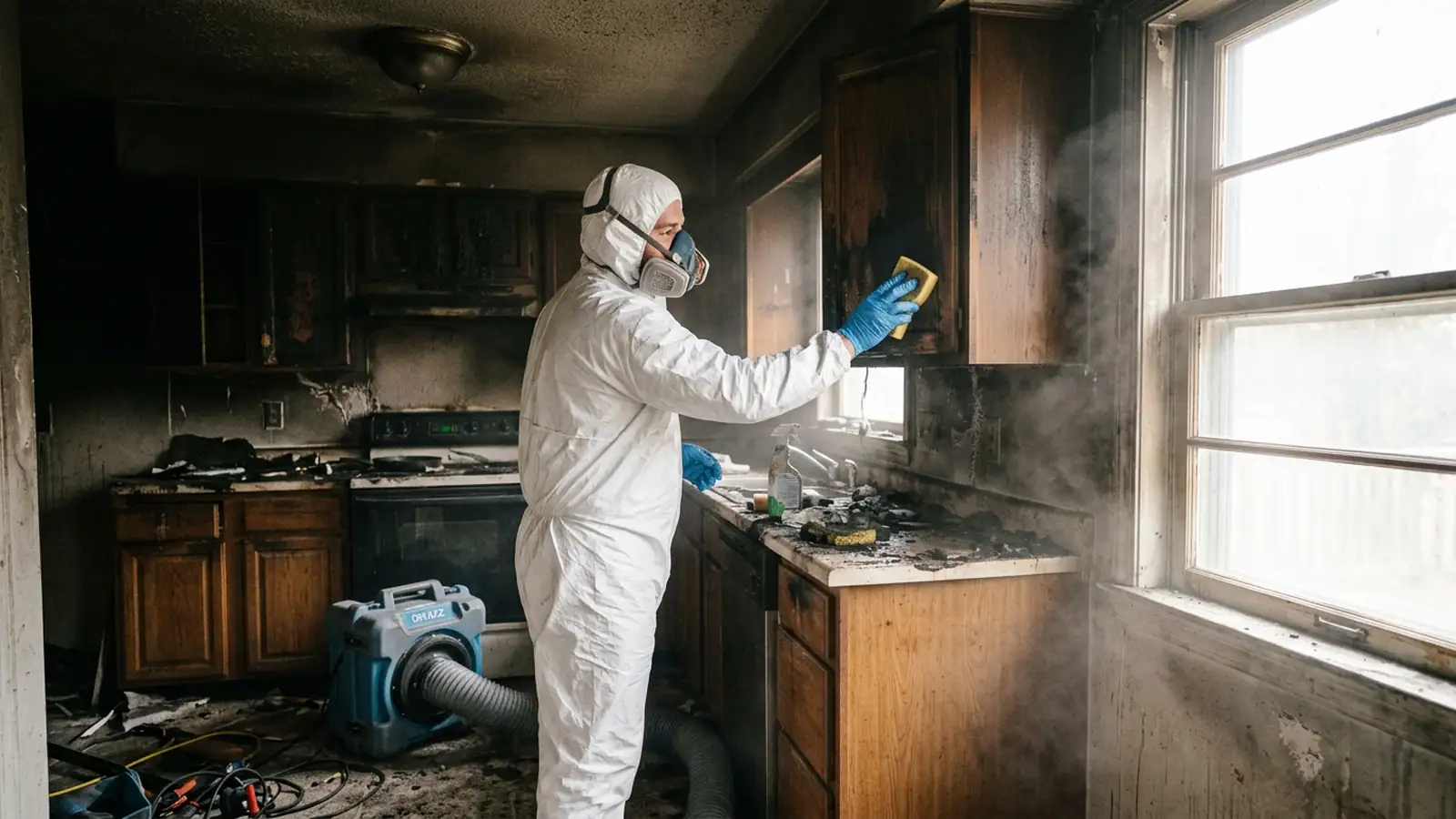
Whether a kitchen fire filled your Port Huron home with smoke or a structural fire displaced your family, the path back starts with stabilization: board-up, water removal and soot cleaning. Water Restoration puts you in touch with local crews who handle every phase, from the first tarp to the final coat of paint, and who document everything for your insurance claim.
Properties in Port Huron (St. Clair County) range over older homes along the original streets, newer subdivisions, rural properties on the outskirts and small businesses downtown. Home fires peak in winter, when space heaters, fireplaces and furnaces are running and holiday cooking and decorating add risk.
What Port Huron fire restoration crews respond to
Older housing stock adds aging plumbing, cast iron drains and original wiring to the list of things that fail. Older electrical systems are a leading cause of fires in this housing stock.
- Electrical fires from aging wiring, overloaded circuits and outdated panels
- Grill and outdoor cooking fires that spread to siding and decks
- Oil furnace puff-backs that coat every room in soot
- Candle and holiday decoration fires
- Small fires that were extinguished quickly but filled the house with smoke
- Lightning-caused attic and roof fires
- Furnace malfunctions at the start of heating season
- Space heater, fireplace and chimney fires during cold weather
The first 48 hours after a fire
Three forms of damage continue after the flames are out. Soot residue corrodes and stains surfaces progressively. Odor molecules migrate deeper into porous materials. And suppression water, often hundreds of gallons, swells, delaminates and eventually grows mold in everything it touched. Early stabilization changes what can be saved.
Emergency services on the first visit typically include board-up and tarping, water extraction, HEPA air filtration, protection of unaffected areas and an initial inventory of contents, with full cleaning and reconstruction following.
From board-up to rebuild
- Emergency contact and safety check. Once the fire department releases the property, the crew evaluates structural stability, utilities and air quality.
- Securing the structure. Broken openings are boarded, damaged roofing tarped and the site secured.
- Water removal and drying. Suppression water is extracted and the structure dried to prevent secondary damage and mold.
- Structural cleaning. Walls, ceilings, cabinets, fixtures and the HVAC system are cleaned using methods chosen for wet, dry or protein smoke.
- Contents inventory, pack-out and cleaning. Salvageable belongings are documented, cleaned on or off site and stored; non-salvageable items are listed for the claim.
- Deodorization at the source, sealing of framing and subfloor, and reconstruction of damaged areas to code.
Contents: what is cleanable and what is not
More than most people expect. Glass, ceramics, metal and sealed wood clean well. Many textiles are restorable with specialty laundering and ozone. Electronics that were not exposed to heat can often be cleaned and tested, and documents and photos can be freeze-dried. Items generally not salvageable include food and medicine exposed to heat or smoke, melted plastics, mattresses, particleboard furniture and heavily sooted drywall and insulation.
What fire damage restoration costs in Port Huron and what insurance covers
The cost of fire damage restoration depends on the size of the fire, the type of smoke residue, how far it traveled through the building and how much of the structure and contents can be cleaned rather than replaced.
Fire and smoke are covered perils in essentially every homeowners and commercial property policy, and most policies include additional living expenses if the property cannot be occupied during repairs.
The restoration companies we connect you with in Port Huron handle claims every day and can explain what is likely to be covered before work begins.
Service area: Port Huron and St. Clair County
Coverage in Port Huron includes ZIP codes 48060 and 48061, along with the rest of St. Clair County.
The same crews also serve nearby communities including Marysville (5 mi), North Street (8 mi), Fort Gratiot (8 mi), Smiths Creek (8 mi), Saint Clair (11 mi), Jeddo (12 mi), Goodells (13 mi), Columbus (13 mi), Avoca (14 mi) and East China (15 mi). If you are just outside Port Huron, call anyway; coverage areas overlap.
Why Port Huron property owners call Water Restoration
- One number covers water, fire, smoke, mold, sewage and biohazard emergencies
- There is no cost or obligation to call and talk through what you are seeing
- Calls are answered 24 hours a day, including nights, weekends and holidays
- Restoration companies in the network are independent local businesses; confirm their licensing and insurance and get the scope in writing
- You are connected with a restoration company that actually serves Port Huron, not a national call center that will call you back tomorrow
Fire Damage in Port Huron: FAQs
What should I do first after a fire at my Port Huron home?
Make sure everyone is safe and do not re-enter until the fire department clears the structure. Call your insurance company to open a claim, then call (888) 755-3821 for emergency board-up and mitigation. Photograph the damage before anything is moved, if it is safe to do so.
How long does fire restoration take in Port Huron?
Emergency stabilization happens within a day or two. Cleaning and deodorizing a smoke-damaged home typically takes one to several weeks. Full reconstruction after a significant fire can take months, depending on the damage and Port Huron permitting timelines.
Can I choose my own restoration contractor?
In nearly all cases, yes. Be cautious of anyone who shows up uninvited at a fire scene. Take the time to call a company you have vetted and get the scope in writing.
Do you provide emergency board-up in Port Huron?
Yes. Board-up, tarping and site security are dispatched around the clock so the property is protected from weather and intruders while the claim and cleanup get underway.
Does my HVAC system need cleaning after a fire?
Almost always. Ducts, the air handler and filters collect soot and redistribute it every time the system runs. Cleaning the system and replacing filters is standard in smoke restoration.